Our Rating
Closing the gap between star ratings and guest expectations
What is Escapes.ca?
Escapes.ca is a Canadian online travel agency focused on selling all-inclusive vacation packages. The platform distributes pre-packaged offers from airline/resort partners—bundling flights, accommodations, and transfers into a single purchase. Escapes operates on a commission-based model, earning revenue on each booking.
Growth Designer
As the sole designer, I was brought on to improve Escapes’ booking experience and uncover design-led opportunities to increase revenue. Partnering closely with the CEO and engineering, I analyzed user friction, modeled business impact, and validated high-impact solutions through testing.
Team: Mike (Growth Design), Sean (CEO), Najam (Engineer), Travel Agents (Domain Consultants)
Impact
Increased customer trust by clearly communicating resort quality (and methodology used to determine)
Reduced post-trip complaint tickets
Created a proprietary Escapes.ca rating system, differentiating the platform in the market.
✨ AI-Accelerated Workflow
Identified the Trust Gap
Reviewed internal feedback and interviewed customers to define the core problem: star ratings misaligned with actual resort experience.
Surfaced key patterns ~70% faster than manual analysis
Used AI (Perplexity) to synthesize advisor notes, customer feedback, and industry rating research.
Explored High-Level Solutions
Collaborated with the team to generate and evaluate multiple approaches to improving clarity and trust.
Accelerated ideation by ~50%
AI accelerated ideation by producing dozens of potential solutions from a single prompt to start with.
Selected Direction & Methodology
Partnered with stakeholders to talk through the pros/cons of a rating system and establish a clear, scalable methodology.
Tested and added AI as a tool to use in the methodology for the proprietary rating system
Design initial concepts
Explored visuals and copywriting to clearly convey the rating.
Cut Copying writing down by 50%
Used AI for drafting popup copy, labels, and explanations.
Prototyped, Tested & Iterated
Validated concepts through user testing, refining the design to improve comprehension, credibility, and trust.
~60% faster, accelerating iteration
AI helped consolidate user testing notes and suggestions for next round iterations
Launched + Monitored
Defined MVP trade-offs and delivered a scalable V1 with engineering, creating a foundation for future expansion.
~50% time savings
Leveraged HotJar’s AI features to monitor post-launch customer sentiment
Problem
Star ratings for many resorts do not align with the actual guest experience, creating expectation gaps prior to booking. This leads to post-trip dissatisfaction, increased support volume, reputational risk, and reduced customer retention.
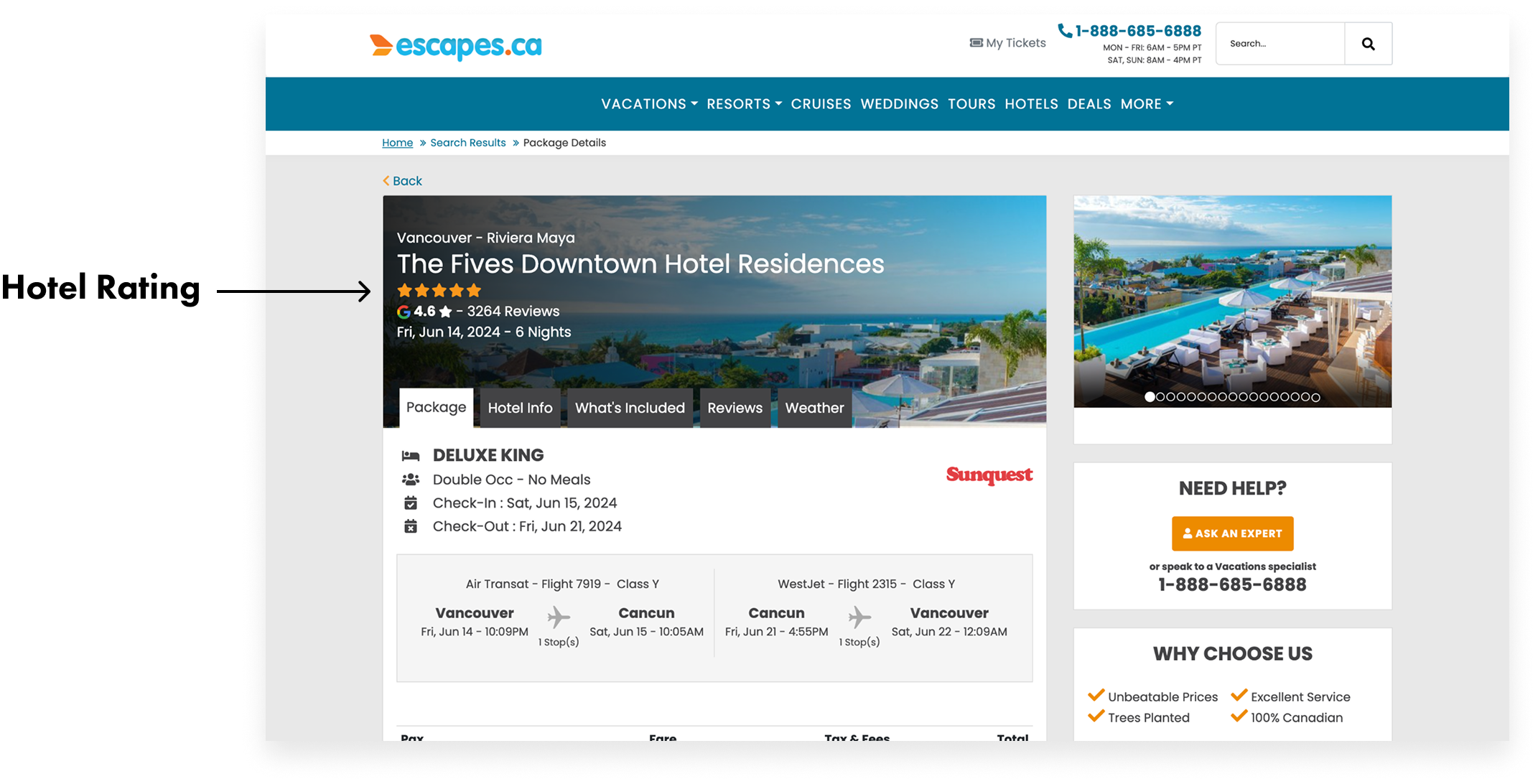
Hotel star ratings are not governed by a universal standard and may be assigned or influenced by hotels, tour operators, third-party suppliers (e.g., Softvoyage), or regional systems. The absence of a standardized industry model reduces the reliability of star ratings as a primary decision-making signal and contributes to systemic expectation misalignment.
Lack of Industry Rating Standardization
In some destinations, such as Cuba, 4 or 5-star resorts are not directly comparable to similarly rated properties in markets like Mexico. Despite sharing the same rating…amenities, service levels, and overall quality can differ significantly, creating expectation gaps at the point of booking and increasing the likelihood of post-trip dissatisfaction.
Geographic Rating Inconsistency
Goal
Reduce expectation gaps to strengthen traveler trust and post-trip satisfaction.

How might we communicate resort quality and experience effectively, ensuring travelers book vacations they’ll truly enjoy?
Ratings by Escapes.ca
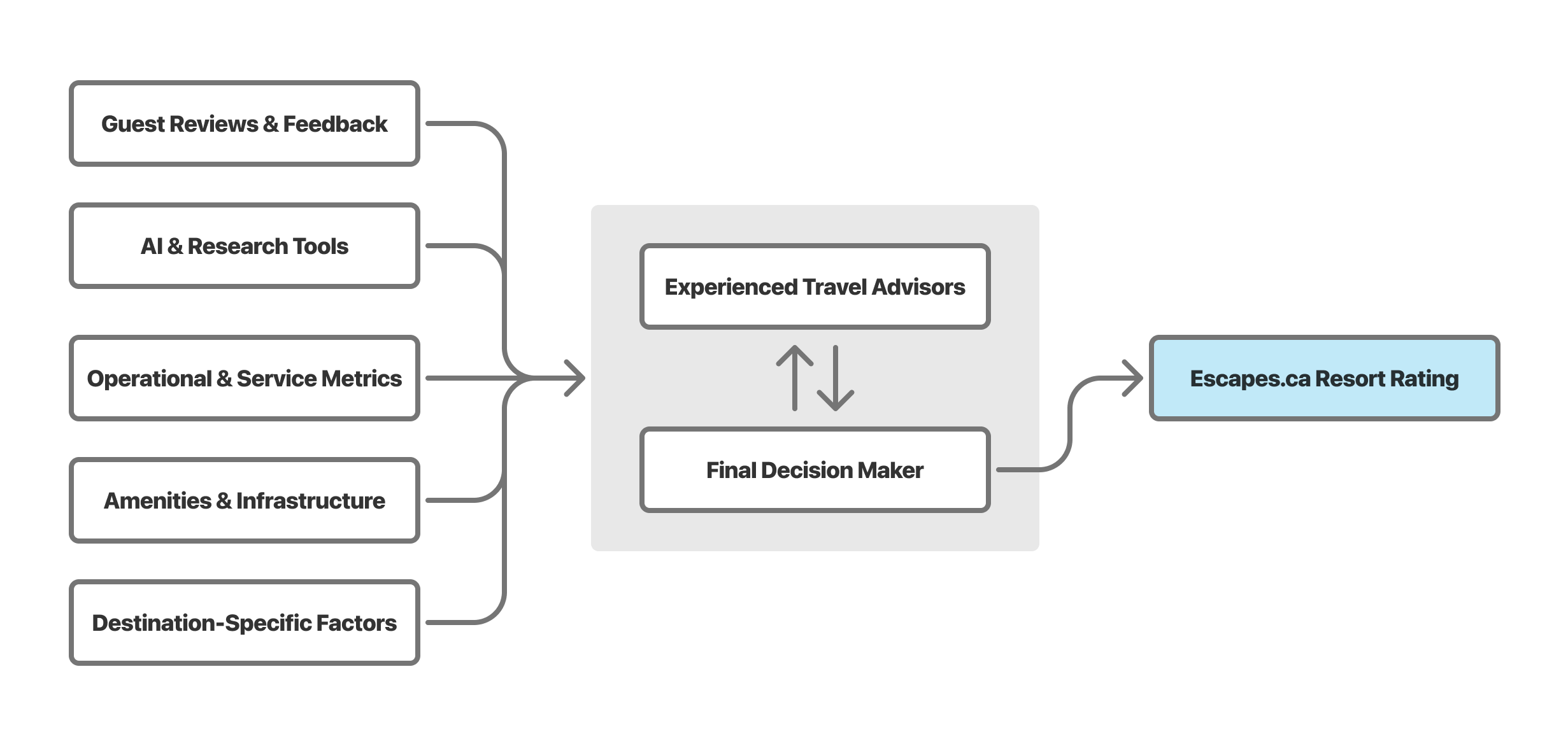
After brainstorming and discussion, we chose to pursue a proprietary Escapes.ca rating system and worked to define how ratings could be determined. This flow chart illustrates the framework that ensures ratings are consistent, credible, and scalable.
I researched different visual approaches and reviewed rating systems from other platforms to identify effective ways to communicate the Escapes.ca rating clearly, build trust, and guide the concepts taken forward into prototyping.
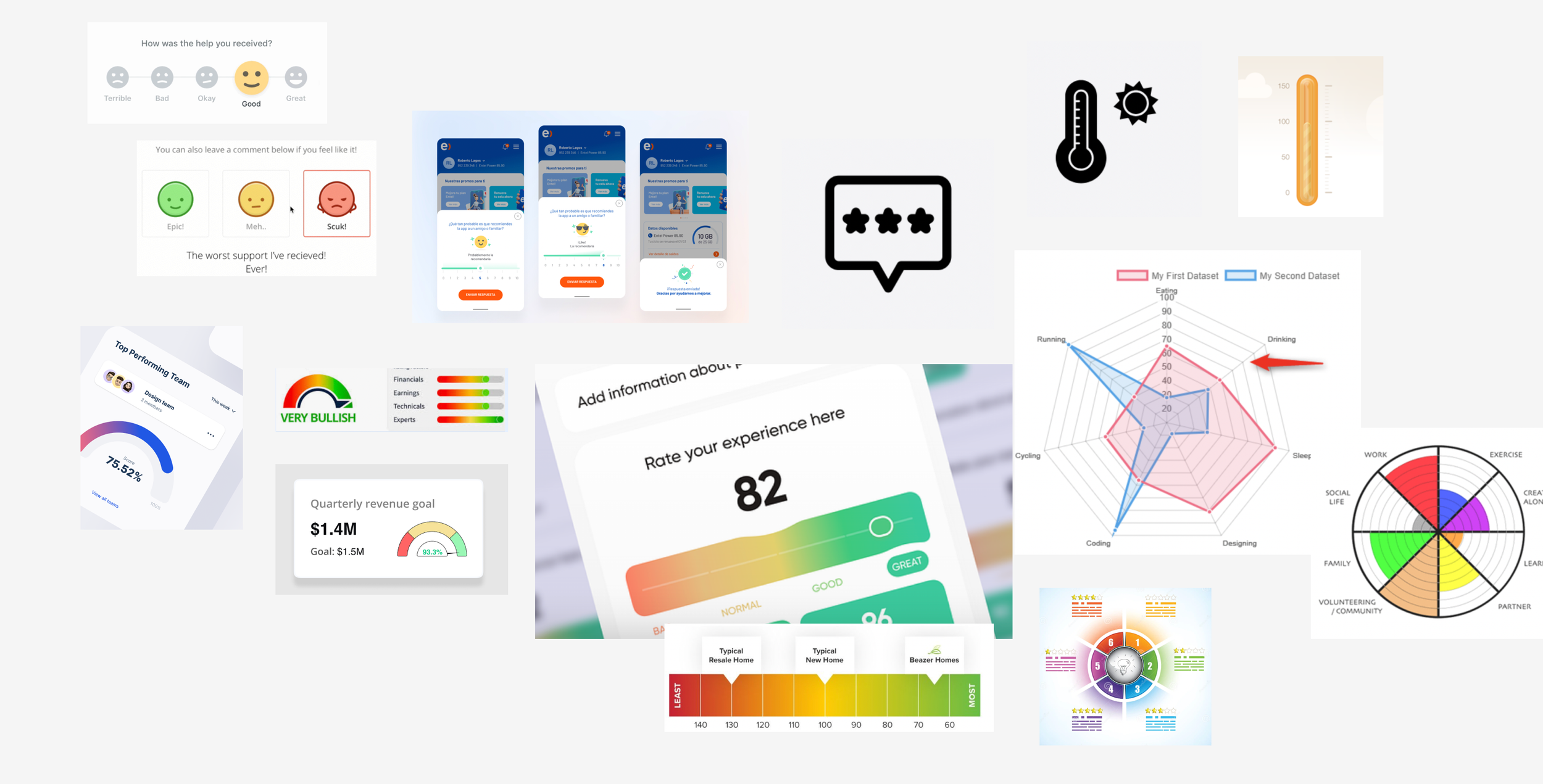
Shortlisted Concepts
I developed three initial visual concepts to present to the team
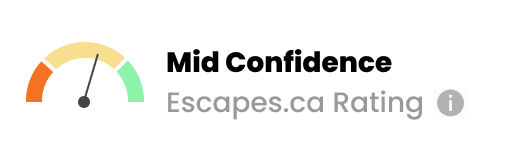
Certainty in the rating
Confidence Meter
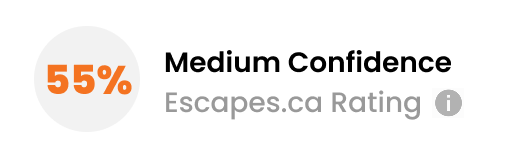
Quantifying resort quality
Percentage Based
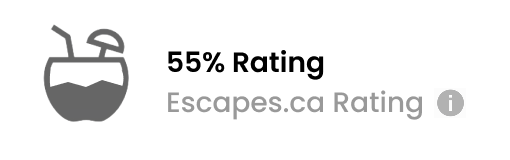
Fractional Based

Aligned with the standard format


Concept #1: Confidence Meter
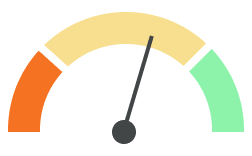
The Confidence Meter stood out as a clear, engaging way to show Escapes.ca’s certainty in resort ratings, prompting a deeper exploration of its benefits and potential risks.
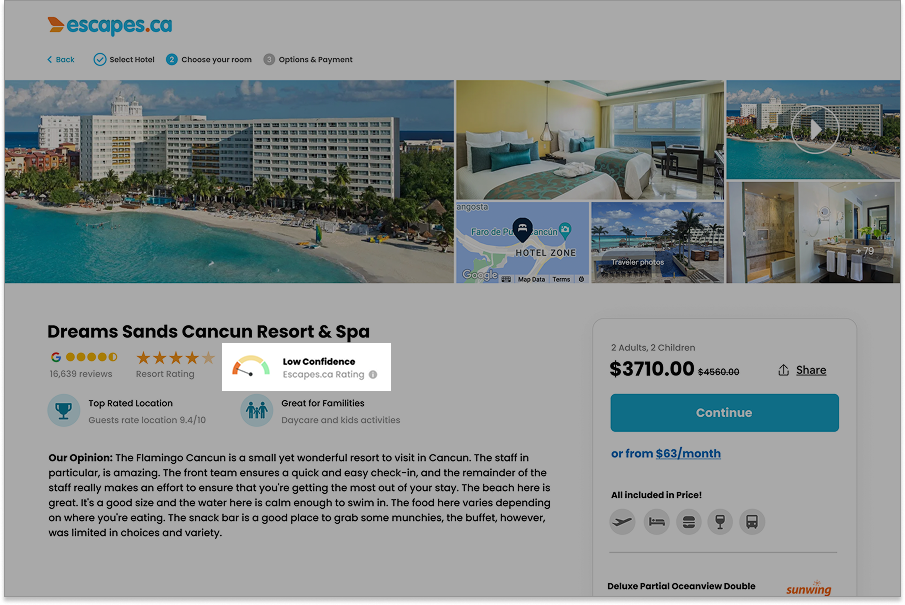
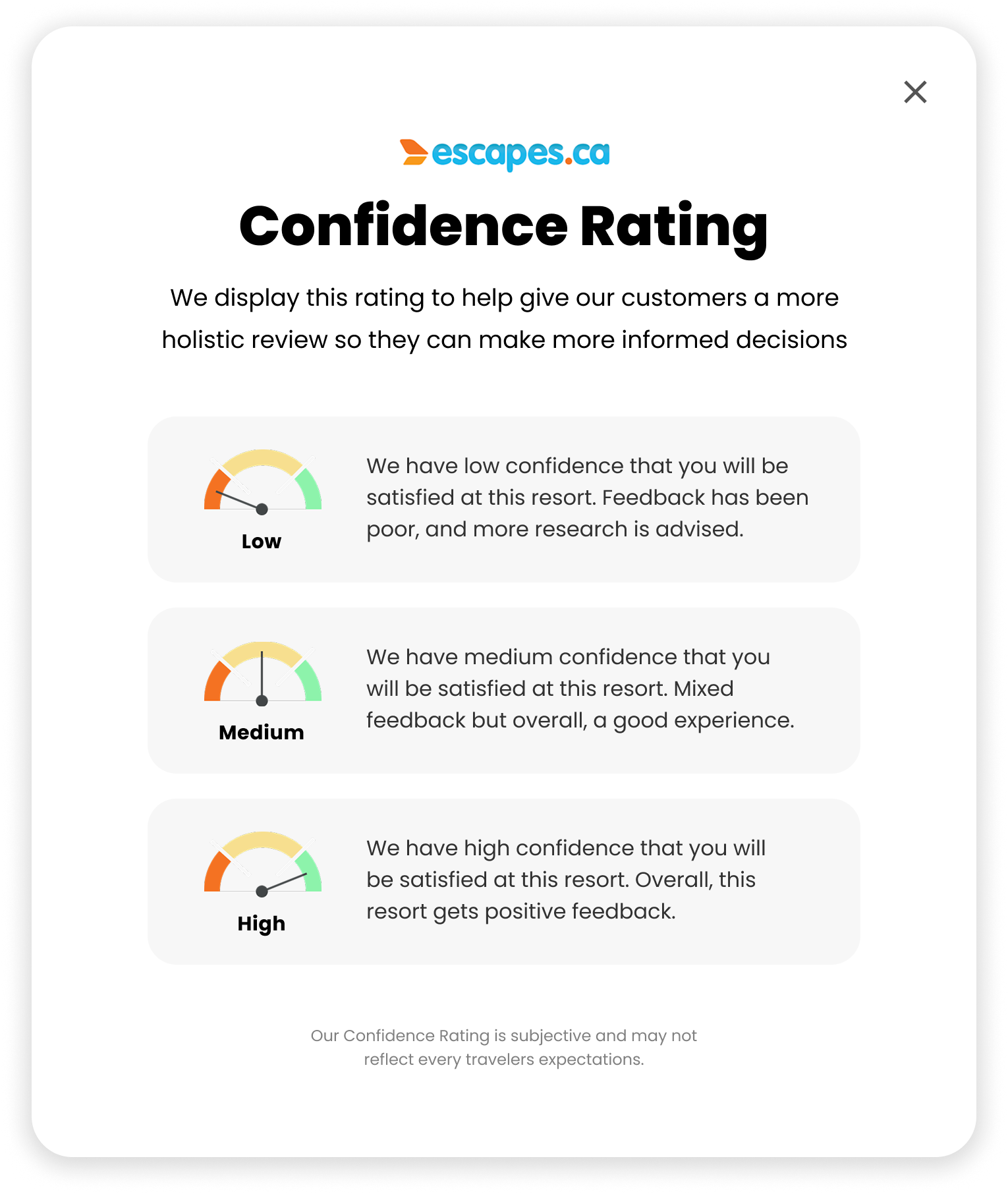
User Confusion / Frustration
Potential customers may be confused or discouraged by a ‘Low Confidence’ label
→ Potential Solution
Recommend higher-confidence resorts inline with low-confidence options (e.g., “Here are some alternatives in your price/date range”)
Perceived Inventory Quality
Multiple low-confidence resorts in a session may lead users to think Escapes.ca has low-quality inventory
→ Potential Solution
Add a filter for ‘Escapes.ca Confidence Ratings’, defaulting to Medium/High
Conversion / Retention Impact
Users may exit the site and not return after encountering low-confidence resorts
→ Potential Solution
Prioritize displaying High Confidence resorts across search results, resort pages, deals pages, and other multi-resort views
Talking through this more, we identified some potential risks and decided to explore other concepts. Some people want a budget vacation and are OK with a lower star rating. The Meter could deter them totally off of these resorts
Concept #2: Star(fish) Rating

The Rating uses blue starfish icons to make ratings fun, beach-themed, and easy to compare against traditional hotel stars.
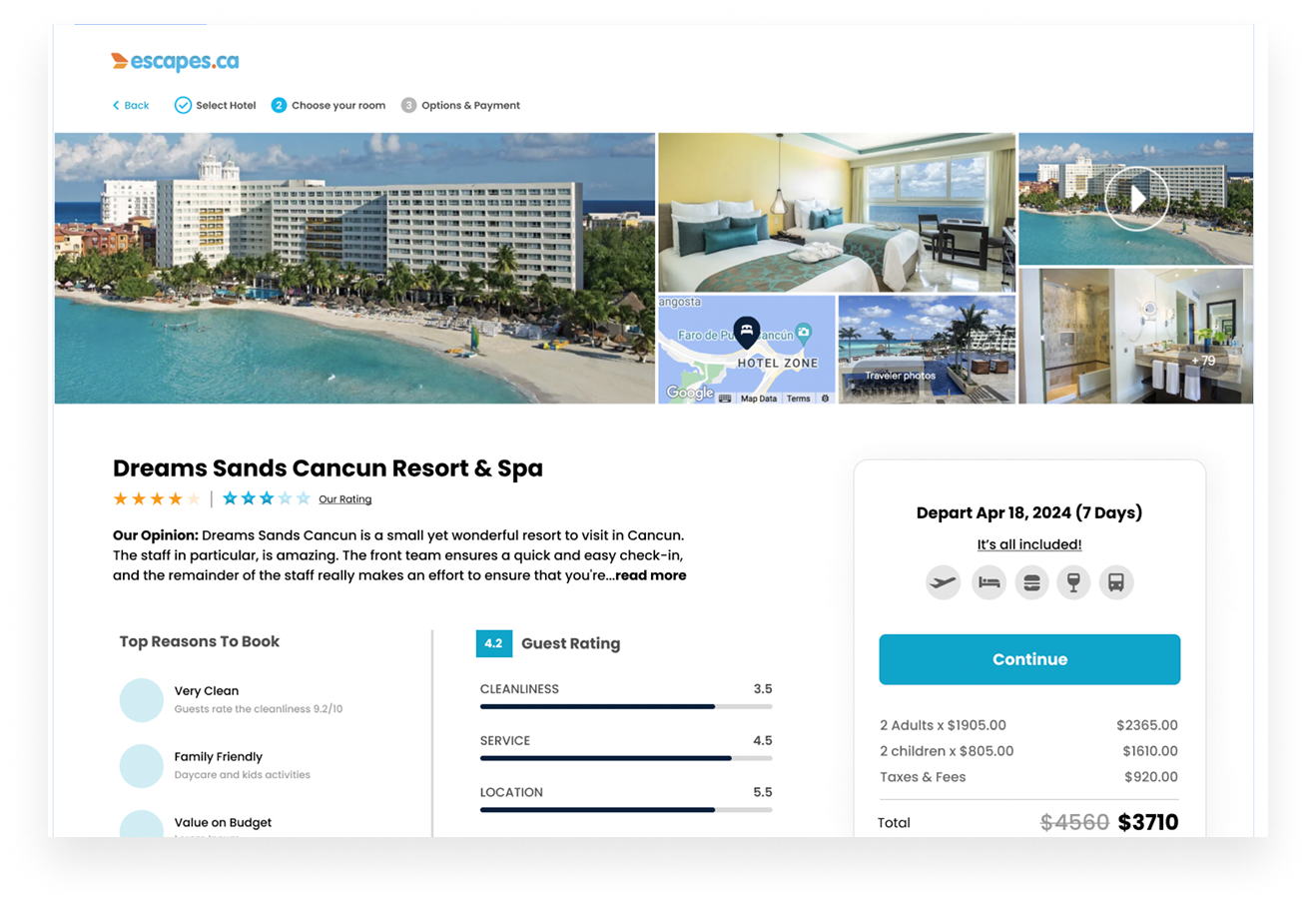
Displayed on Resort Page
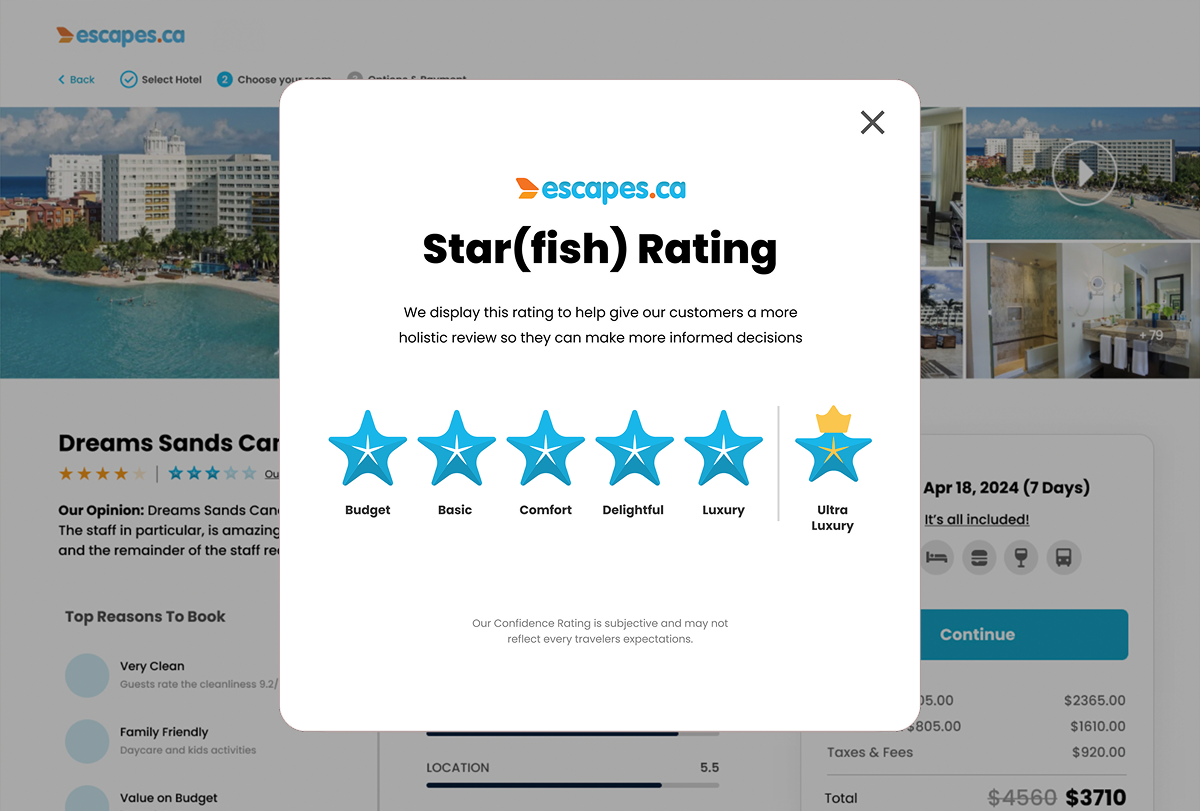
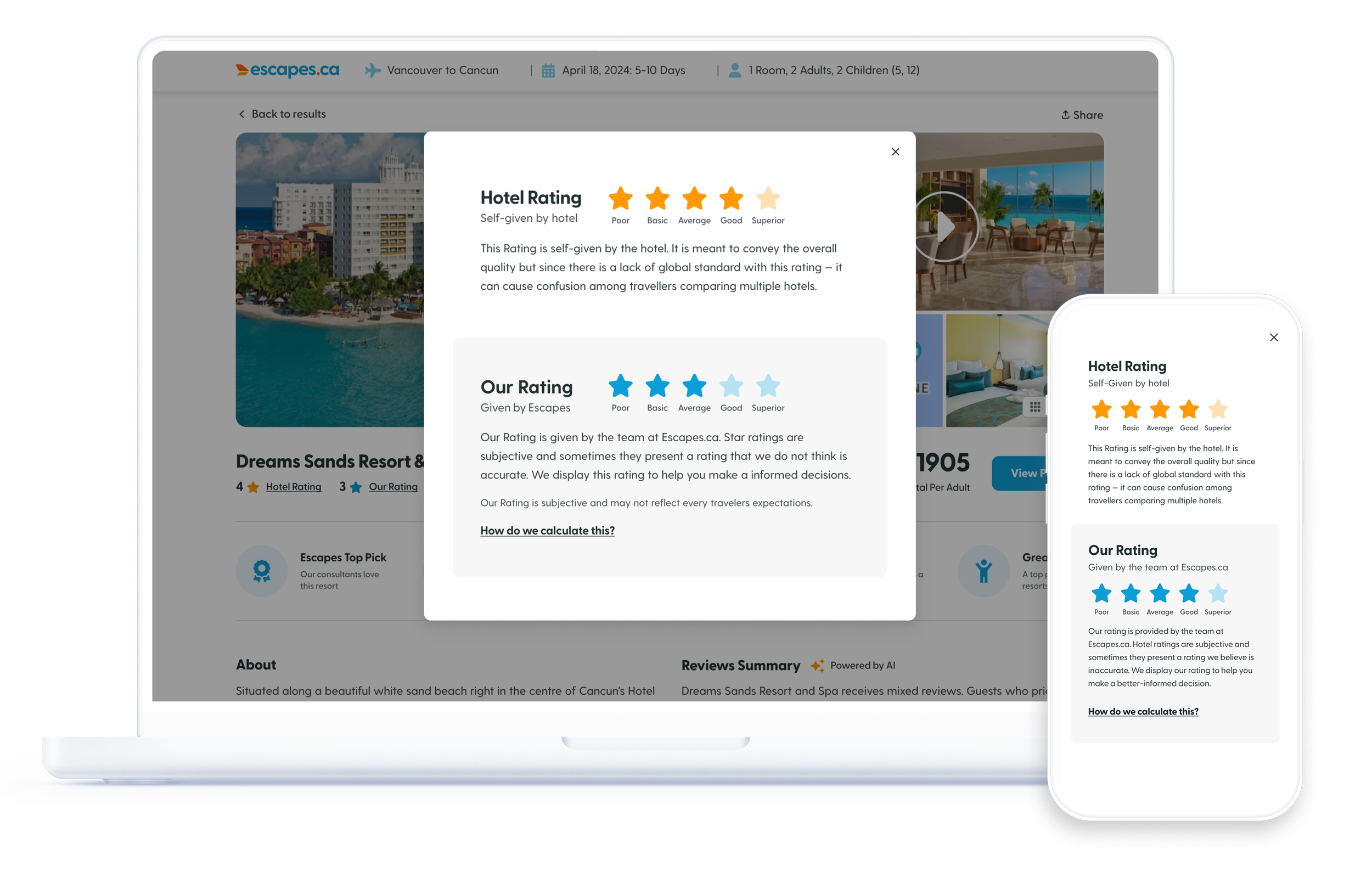
Popup designed with further info
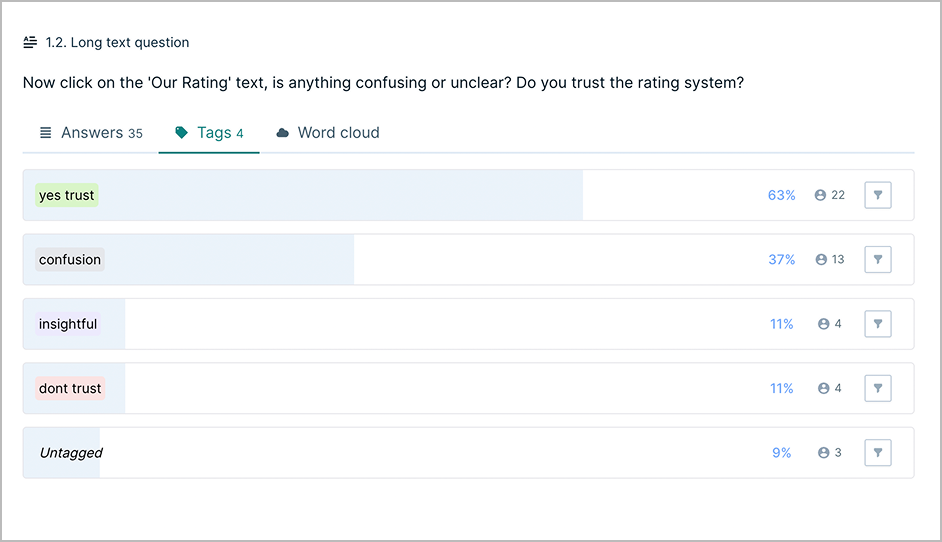
To validate the clarity and credibility of the Star(Fish) Rating, we conducted unmoderated testing with 50 participants using Lyssna. We aimed to assess whether users understood what the blue stars represented and whether the supporting explanation felt clear and trustworthy.
Testing Clarity and Trust
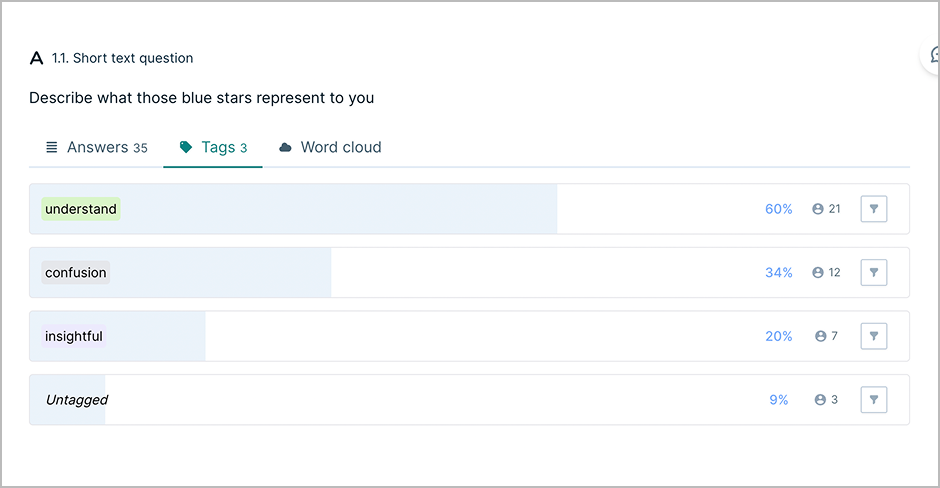
Rating Confusion (Pre-Click)
Many participants were unclear about the difference between:
- Traditional hotel star ratings (orange)
- Escapes.ca’s Star(Fish) rating (blue)
→ Iterations Made
Added a “Hotel Rating” label adjacent to the yellow stars to clearly distinguish them from the Escapes.ca rating.
Visually connected the “Our Rating” to the “Our Opinion” paragraph
Visual Ambiguity (Pre-Click)
While the starfish design was described as “cute,” some users found the white interior of the icons visually confusing, interpreting them as partial or half-filled stars.
→ Iterations Made
Aligned the Escapes.ca star icons with the hotel star shape to create a direct, one-to-one comparison and reduce visual confusion.
Trust Gaps (Post-Click)
Users questioned the legitimacy of the Escapes.ca Star(Fish) rating and wanted clarity on how it was calculated, including whether hotels could influence it. Without transparency, users trusted guest ratings more and hesitated to rely on Escapes.ca’s system.
→ Iterations Made
Introduced an additional popup for Hotel Ratings to clarify their purpose and help users distinguish them from the Escapes.ca rating.
Added explanatory text under an accordion for the Escapes Rating to describe its methodology
Next Iteration Tested
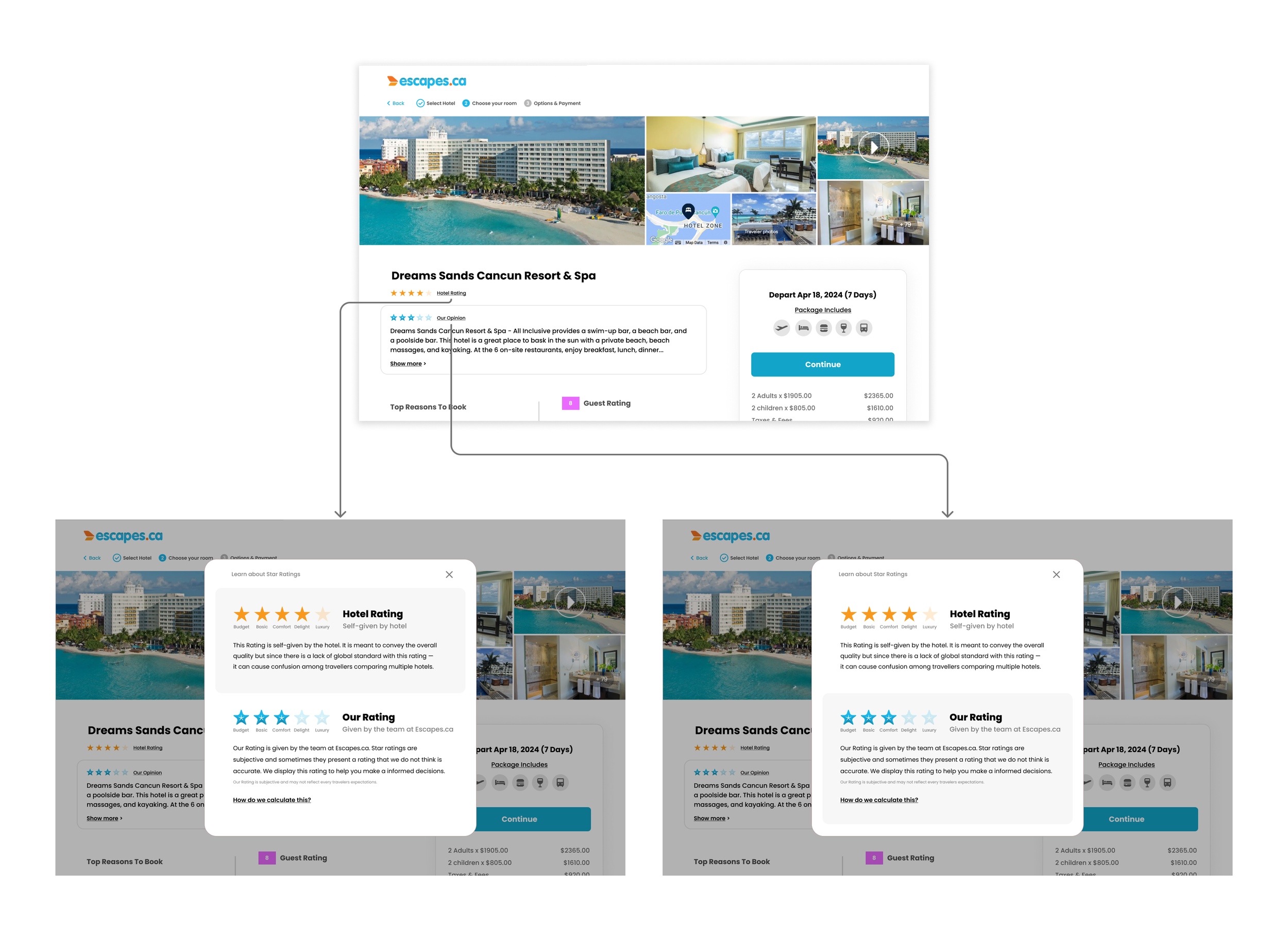
Two design variations were created to evaluate improvements based on the previous user testing insights. We conducted moderated live testing to explore user perceptions in depth and gather targeted feedback, testing with a mix of customers and internal travel advisor experts.
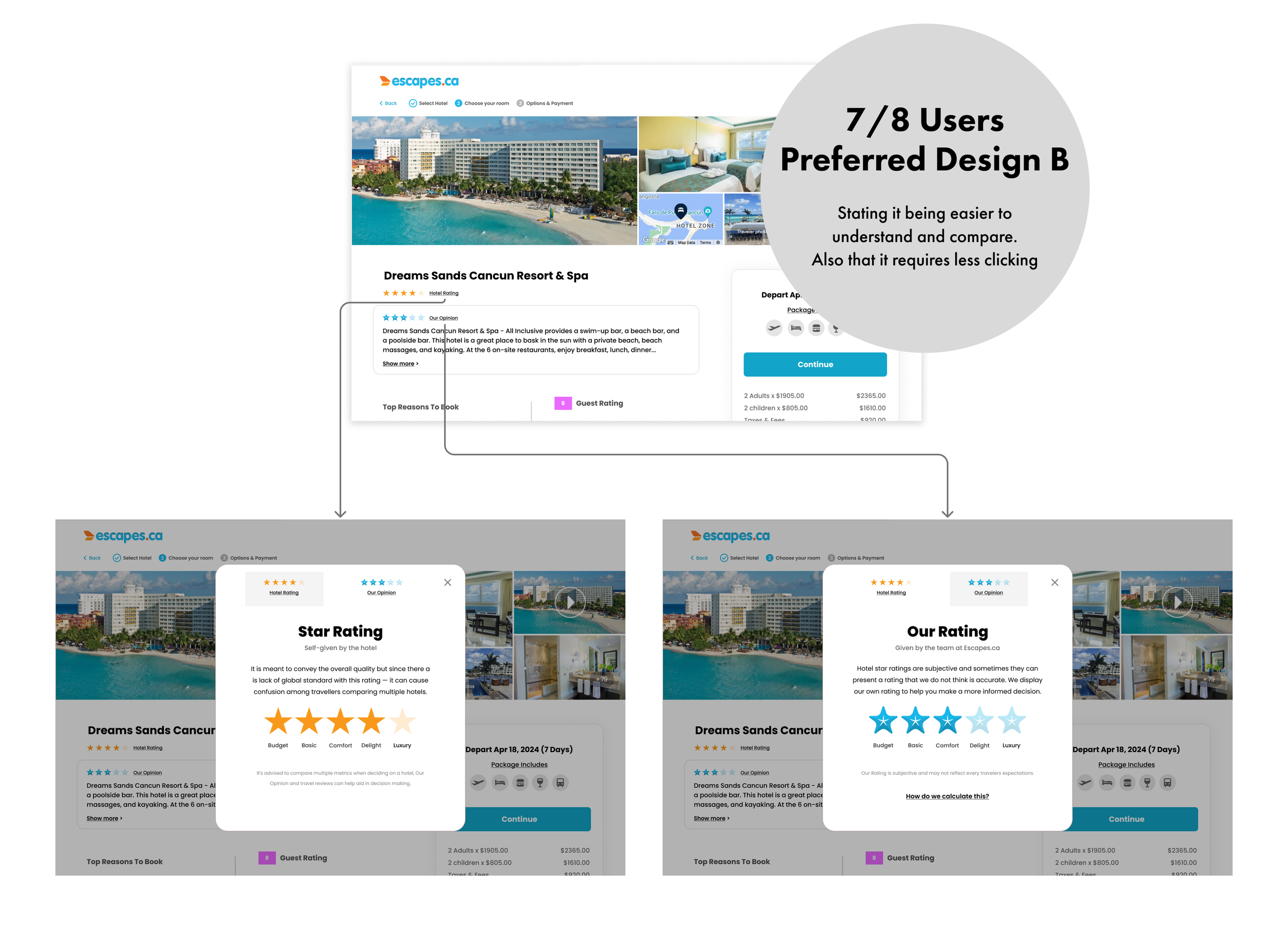

100% of participants (8/8) had a good understanding of what the “Our Rating” rating was immediately.
Good Comprehension (Pre-Click)
Most participants (7/8) preferred Design A, which showed both hotel and Escapes.ca ratings in a single popup. Users found it easier to compare at a glance and appreciated the “How we calculate this” explanation, which clarified the methodology and why ratings might differ.
Great Comprehension (Post-Click)
Participants consistently found the Escapes.ca rating valuable and credible, describing it as “a valid opinion from agents who have been there” and a helpful “buyer beware” guide.
High Perceived Value

Terms like “Delightful” were confusing for some participants (4/8). A few (3/8) suggested that rating names could be improved or clarified.
Individual Star Labels Confusing
Some users (3/8) wanted dates and review authors to better understand the source and recency of ratings. A few also suggested showing the breakdown of evaluation criteria (e.g., Rooms, Food, Service).
Provide Deeper Rating Methodology Details
Trade Offs for Launch v1
To ensure a timely launch of the Rating system, we made intentional trade-off prioritizing speed while maintaining core functionality. These decisions were planned for future iteration and refinement
Ultra-Luxury Rating Deferred
We postponed “ultra-luxury” star level, as accurately rating these resorts would require significant research and team input.
‘Our Opinion’ Paragraph Removed
Individual write-ups for each resort were deferred to reduce labor and complexity for the team
Via on Screen HotJar Survey (Post Launch)
Customer Feedback
“ I like the idea that escapes gives me a rating, and i feel more comfortable... i’d definitely try escapes again based on this”
“I feel a sense of comfort, feel more comfortable going with escapes.ca if we are going with a rating like that (giving less stars).”
“Yes would trust as "our rating", very valid — agents that have been there. Kind of a warning 'book at your own perils'. Business case for this - 'buyer beware'

Escapes.ca’s rating system is a first-of-its-kind feature,
giving travelers confidence through expert insight and clear methodology not offered elsewhere in the industry
The feature reduces confusion, supports confident booking decisions, and positions the platform for higher conversions, lower complaint volume, and increased customer loyalty.
Even minor elements—like star shapes, color differences, or label wording—can significantly impact user perception and trust.
Small details make a BIG difference
Learnings/Insights